
No products in the cart.
What Should You Include in a Sensory Room for an ADHD Child?
Creating a sensory-friendly space can help children with ADHD stay calm, focused, and emotionally balanced. Here are the seven essentials every parent should consider—without needing expensive equipment.
Soothing Sensory Lighting:
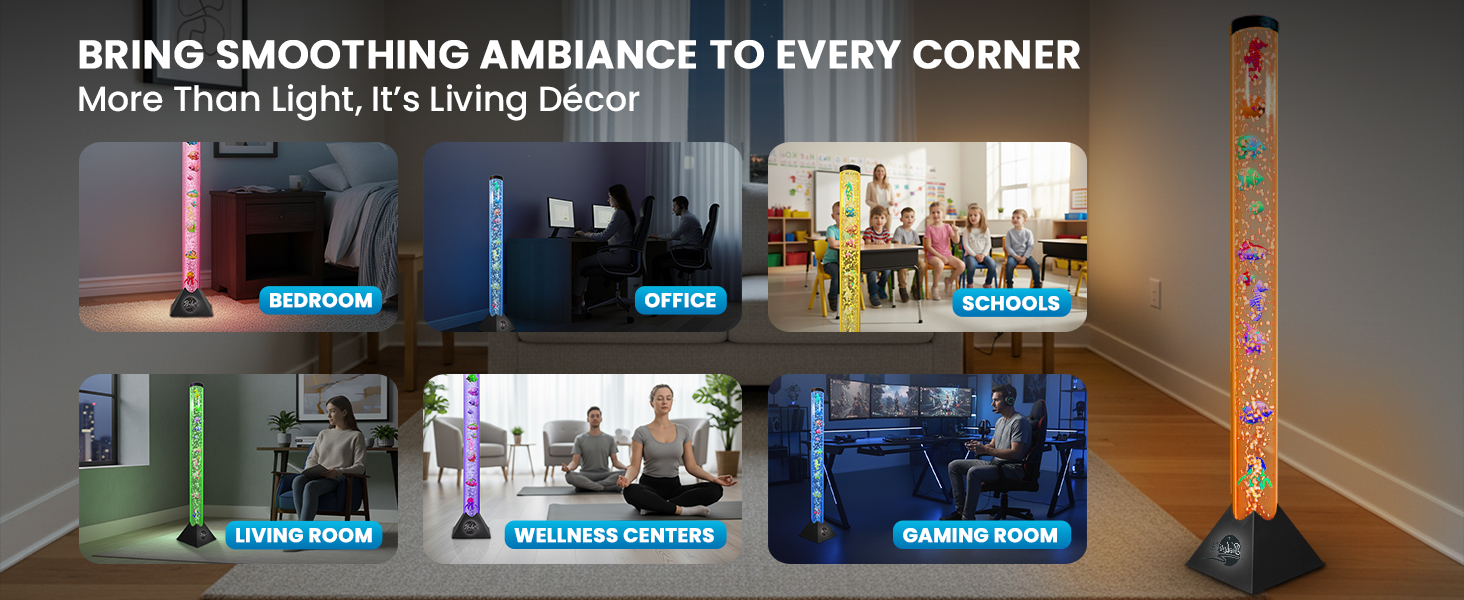
Soft, color-changing lights help reduce overstimulation and create a peaceful atmosphere for relaxation or study time.
Why They Help:
Soft transitions between colors create a calming visual experience that reduces stress and supports emotional balance.
Slow-Moving Bubble Lighting
Why They Help:
The gentle rise of bubbles paired with soft illumination naturally captures attention and encourages quiet focus.
Night-Friendly Low Lighting
Why They Help:
Dim lights help with transitions, bedtime routines, and maintaining a calmer mood during the evening.
Ambient Wall Glow Lights
Why They Help:
Indirect wall lighting creates a peaceful environment by reducing harsh brightness and visual distractions.
How Can You Build a Light-Based Sensory Room for an ADHD Child?
Start with Soft Lighting:
Avoid bright overhead lights and rely on warm, gentle illumination.
Choose Slow Visual Movement:
Lights with steady, predictable motion help calm the nervous system.
Use Multiple Light Zones:
One corner for focus, one for calming, one for bedtime routines.
Keep It Simple:
Just a few lights can transform the environment without overwhelming the child.
Light-Based Sensory Room Setup
One calming, slow-moving sensory light
One ambient wall or corner light
One interactive or color-changing light
Soft pathway or strip lighting for movement
Gentle night lighting for routines
Conclusion
A sensory room doesn’t need dozens of items—lights alone can make a huge impact. With calm visual motion, soft ambient glow, and predictable lighting patterns, you can create a supportive environment that helps an ADHD child focus better, feel grounded, and unwind after a long day.






Add comment